
Cancer is usually discussed in terms of proliferation. Yet there is something more fundamental: before a tumor cell can divide, it must survive.
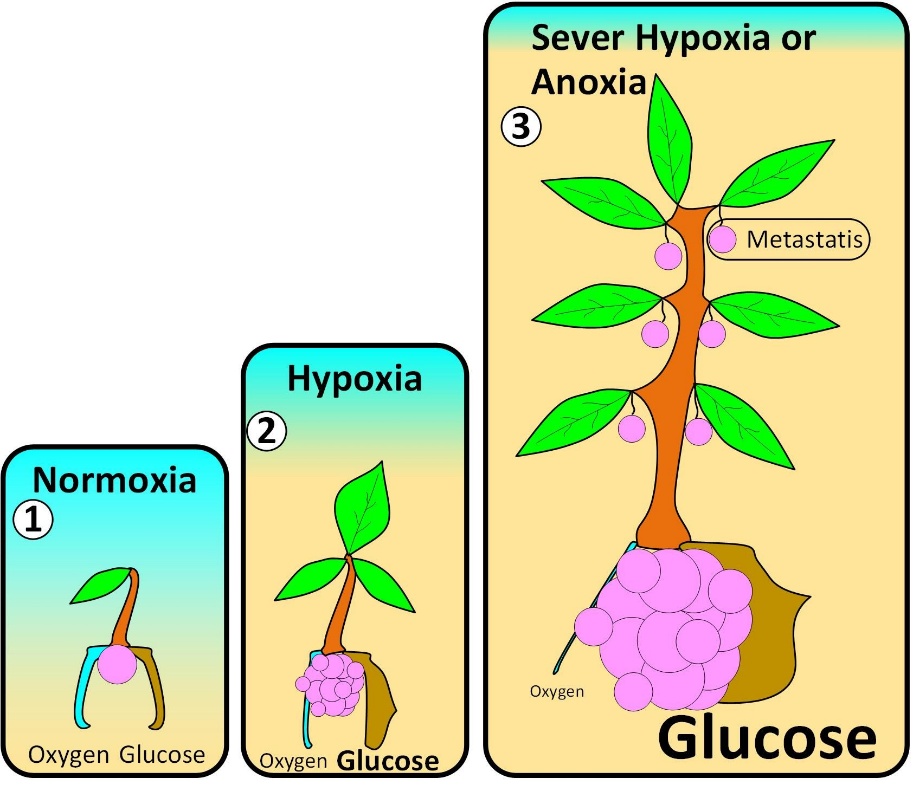
As a solid tumor grows, its blood supply fails to keep pace. Vessels are sparse, poorly organized and unstable. The distances over which oxygen and nutrients must travel increase, and some regions become severely hypoxic.
This changes the cell’s priorities. Better oxygenated cells generate ATP efficiently through oxidative phosphorylation (OXPHOS), using several fuels. Cells in more hypoxic regions become increasingly dependent on glycolysis. Glycolysis yields 2 ATP per glucose, compared with roughly 30–32 ATP from its complete oxidation.
Glucose also supports other essential tasks, including biosynthesis and the maintenance of redox balance. The supply of energy and building blocks therefore matters for both survival and proliferation.
A cell already operating close to its metabolic limit has little margin for further fuel restriction.
Could a short period of markedly reduced glucose availability push vulnerable hypoxic tumor cells beyond their survival limit? This question motivates therapeutic hypoglycemia.
Therapeutic hypoglycemia is an experimental treatment concept, not an established cancer treatment.