
Which cells truly require glucose, and how much do they need when other tissues use alternative fuels? Prolonged fasting studies show that the brain can replace much of its usual glucose consumption with ketones. Those observations describe fuel use during fasting; they do not establish a fixed ceiling for ketone use under a different, controlled fuel supply.
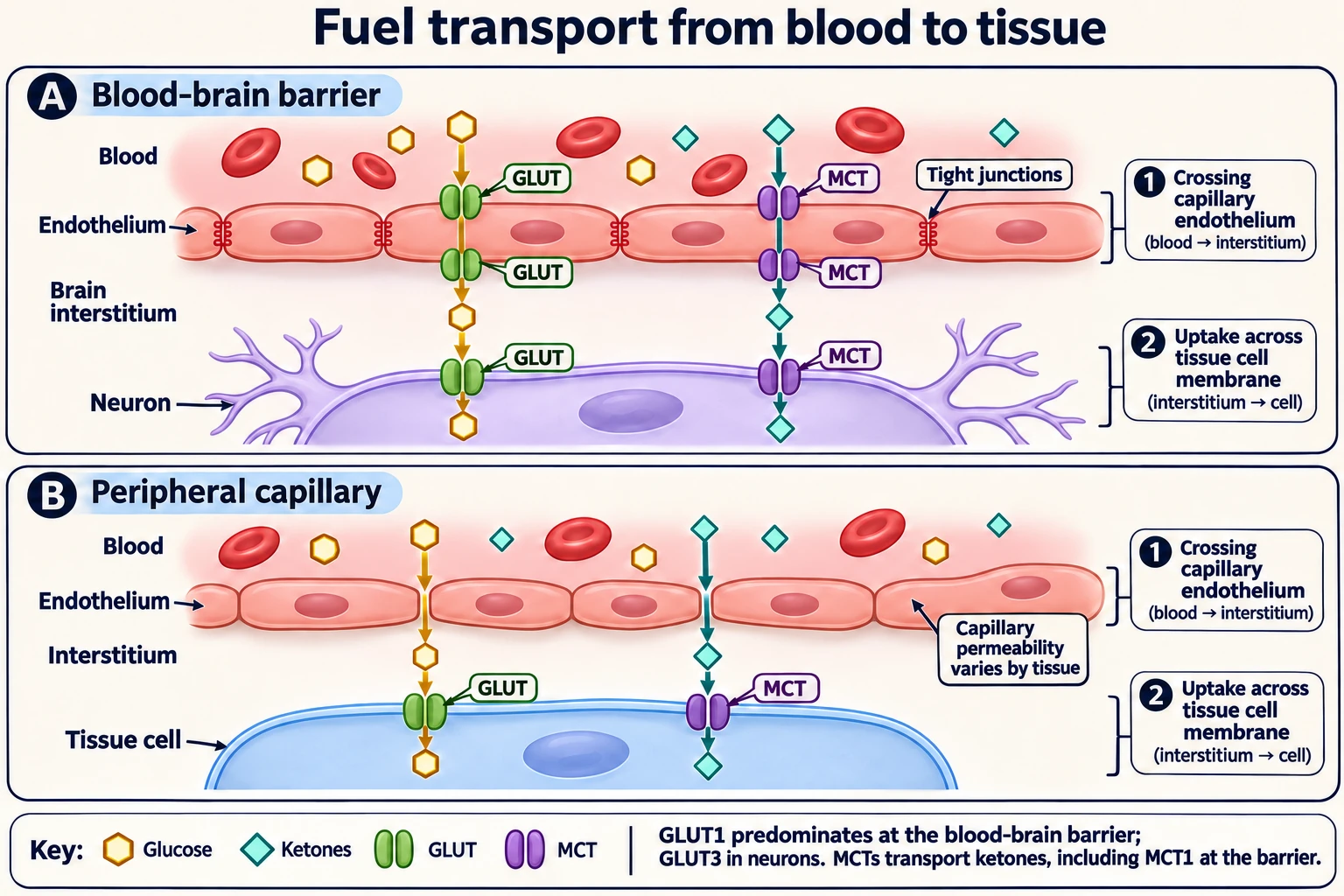
Many tissues can obtain energy from fatty acids, ketones or lactate. During prolonged fasting, the brain shifts much of its energy production toward ketones. Yet reduced glucose dependence does not mean that the body has no glucose requirement.
Mature red blood cells have no mitochondria and depend on glycolysis for ATP. However, their ATP requirements are low and they survive with limited access to glucose (<1 mM). Other cells and tissue regions also need glucose for particular functions. The liver and kidneys maintain glucose production during fasting to meet these needs, using substrates that include lactate, glycerol and glucogenic amino acids.
Lactate recycling is important here. Red blood cells convert glucose to lactate; the liver and kidneys can recycle that lactate into glucose. This shifts the energy cost to other tissues and means that glucose turnover is not identical to the net requirement for newly supplied carbon.
The blood–brain barrier adds a transport constraint. Tight junctions restrict passage between endothelial cells, and glucose crosses through GLUT1.
Sources
Owen et al. (1967). Brain Metabolism during Fasting. https://doi.org/10.1172/JCI105650
Drenick et al. (1972). Resistance to Symptomatic Insulin Reactions after Fasting. https://doi.org/10.1172/JCI107095