
In glycolytic tumor regions, lactate production and acid handling contribute to an acidic, immunosuppressive tumor environment. Local lactate concentration and pH also depend on transport, buffering and clearance.
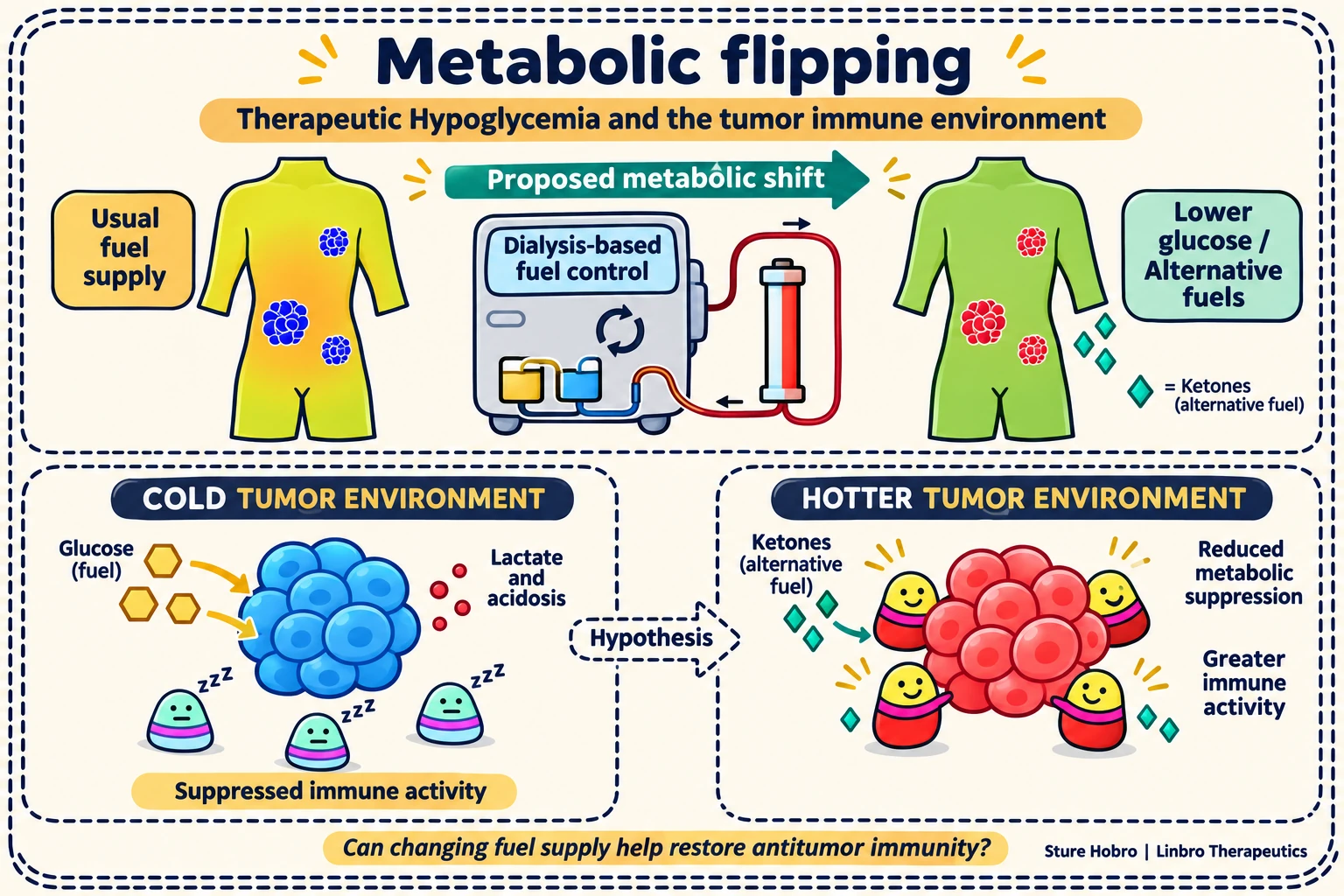
High lactate levels and low pH can suppress important immune functions. Fischer and colleagues showed that tumor-derived lactic acid impaired human cytotoxic T-cell activity in vitro. This provides a mechanistic reason to ask whether changing the metabolic environment could restore immune function.
Cold tumors can have poor immune-cell infiltration, weak antigen recognition and several forms of immune suppression. Reducing lactate and acidosis addresses one part of this environment.
Ketones offer another part of the hypothesis. In mouse cancer models, ketogenic diets or β-hydroxybutyrate enhanced the anticancer effects of PD-1 blockade, providing experimental support for a link between ketone metabolism and antitumor immunity.
My hypothesis is that Therapeutic Hypoglycemia could reduce glucose-driven lactate production in susceptible tumor regions while alternative fuels support selected immune functions. A less acidic environment would then help immune cells attack the tumor and improve the response to immunotherapy.
The critical test is the combined result: glucose restriction also affects immune cells, and oxidative fuels still require oxygen. Tumor pH, lactate, immune-cell infiltration and function, and treatment response would show whether the proposed shift occurs.
Sources
Fischer et al. (2007). Blood 109:3812–3819. https://doi.org/10.1182/blood-2006-07-035972
Ferrere et al. (2021). JCI Insight 6:e145207. https://doi.org/10.1172/jci.insight.145207