
A tumor can depend critically on glucose without consuming exceptionally large amounts of it.
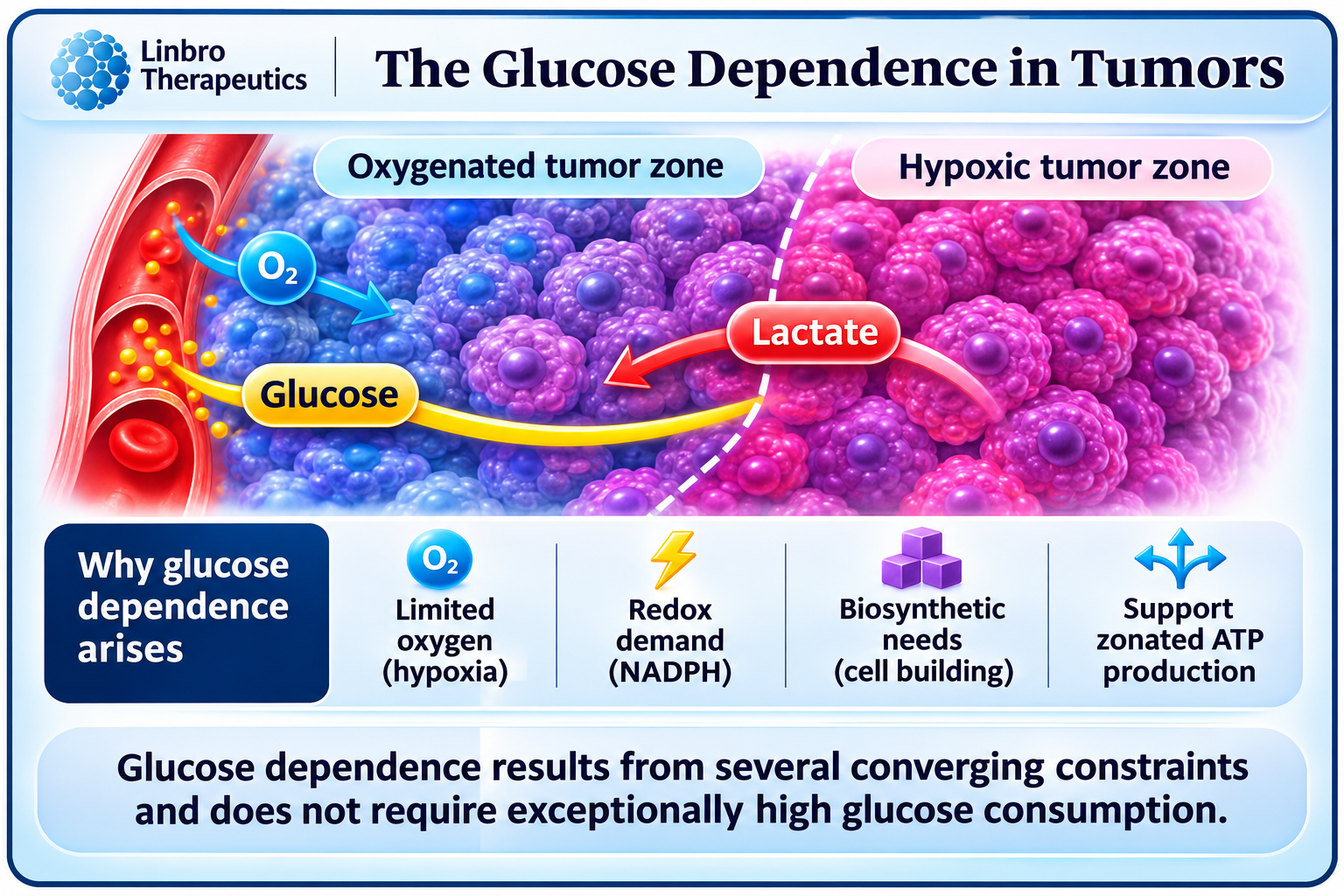
Figure 1. The glucose dependence in tumors. Glucose dependence does not require exceptionally high glucose consumption. Hypoxia restricts oxidative ATP production and narrows fuel alternatives, while redox balance, biosynthesis and metabolic cooperation also shape glucose requirements.
That distinction matters. My hypothesis is that severely hypoxic tumor cells are particularly vulnerable to glucose restriction because they have fewer metabolic alternatives.
FDG-PET reveals the uptake and trapping of a glucose analogue. It does not directly measure how much glucose is oxidized, converted to lactate, incorporated into new cells, or required for survival.
The most important distinction is between how much glucose a tumor consumes and how readily it can survive without it.
In oxygenated regions, cancer cells can use oxidative metabolism and several fuels. In severely hypoxic regions, limited oxygen restricts oxidative ATP production, increasing dependence on glucose and glycolysis.
A modest glucose supply can therefore be essential. Low consumption does not imply low dependence.
Nor does increased uptake necessarily mean faster proliferation. Glucose supports maintenance, energy production, redox balance and biosynthesis. Which process limits growth depends on the local conditions.
This changes the question we should ask.
Instead of simply asking whether tumors consume more glucose than normal tissues, we should ask:
Which tumor cells have the fewest alternatives when glucose availability falls?
Testing this hypothesis requires measurements of local glucose availability, metabolic adaptation and cell survival—not FDG intensity alone.
Source: Faubert B et al. (2017). Lactate Metabolism in Human Lung Tumors. Cell 171, 358–371.e9. https://doi.org/10.1016/j.cell.2017.09.019. This human tumor study documents lactate utilization, including in tumors with high FDG uptake; FDG trapping alone does not measure the fate of glucose carbon.
Comments
How your comment is handled
Linbro Therapeutics AB is responsible for comments. Your display name, text and date are published if your comment is approved. Your ChatGPT identity is used for sign-in and spam prevention, but is not shown publicly. Pending comments are deleted within 90 days. Approved comments remain until removed or the comment service is discontinued. Do not include sensitive health information. Contact sture.hobro@linbrotherapeutics.com to request removal or ask about how comments are handled.