
Within the complex tumor microenvironment, cancer cells cooperate metabolically in a fascinating way.
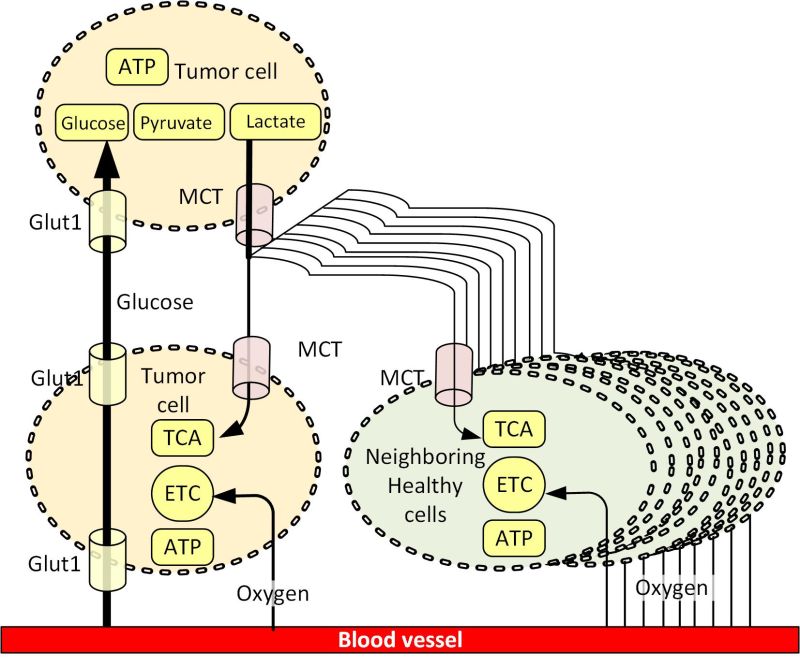
Hypoxic cancer cells, struggling with oxygen deprivation, rely heavily on glycolysis to generate ATP. They consume glucose and release lactate as a byproduct.
But this lactate does not necessarily go to waste.
Better oxygenated cancer cells, particularly those closer to functioning blood vessels, use lactate as a fuel for ATP production through oxidative phosphorylation (OXPHOS). Nearby healthy cells may also utilize it.
This metabolic cooperation spares glucose in better oxygenated cells, leaving more available for hypoxic cancer cells that depend on glycolysis for survival.
Could therapeutic glucose deprivation disrupt this cooperation?
Our proposed therapeutic hypoglycemia strategy aims to lower circulating glucose markedly for a limited treatment window while providing alternative fuels to healthy tissues.
Glucose deprivation puts severe metabolic pressure on hypoxic cells that rely on glycolysis. Our hypothesis is that reducing both glucose supply and lactate availability will weaken the metabolic cooperation: better oxygenated cells may turn to the remaining glucose, increasing competition with hypoxic cells.
Can sufficiently pronounced glucose deprivation damage hypoxic tumor cells selectively without unacceptable harm to the patient? That is the experimental question behind therapeutic hypoglycemia.
Therapeutic hypoglycemia is an experimental treatment concept, not an established cancer treatment.