
Lactate dehydrogenase (LDH) is linked to aggressive cancer, but what exactly does a high LDH level tell us?
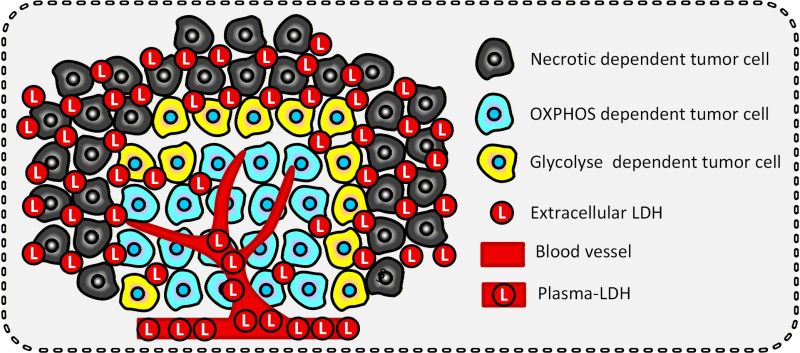
We need to distinguish between LDH acting inside cells, LDH released into the tumor microenvironment, and the LDH activity measured in blood. Clinical studies usually report the last of these.
A high plasma LDH level does not demonstrate that tumor mitochondria are defective. Most solid tumors retain OXPHOS capacity, even though oxygen supply is limited in parts of the tumor.
LDH enters the circulation when cells are damaged or die. Tumor burden, necrosis and tissue injury contribute to elevated plasma LDH. Hemolysis, liver disease and other non-tumor conditions can also elevate it. Hypoxia and poor vascularization are part of the tumor picture, but plasma LDH alone does not reveal their contribution or which metabolic pathways individual tumor cells use.
High plasma LDH is associated with a poorer prognosis in several cancers. That association makes LDH clinically useful, but it is not proof of a particular mechanism.
An interesting question for therapeutic hypoglycemia is whether elevated plasma LDH identifies tumors that are especially vulnerable to glucose deprivation. This is a testable biomarker hypothesis.
In short, plasma LDH signals tumor burden and stress. It should not be read as a simple measurement of mitochondrial failure.
Therapeutic hypoglycemia is an experimental treatment concept, not an established cancer treatment.