
Tumor-infiltrating T cells must fight cancer in an environment where glucose is often scarce. An important question is whether ketones can sustain their ability to kill cancer cells when glucose availability is severely restricted.
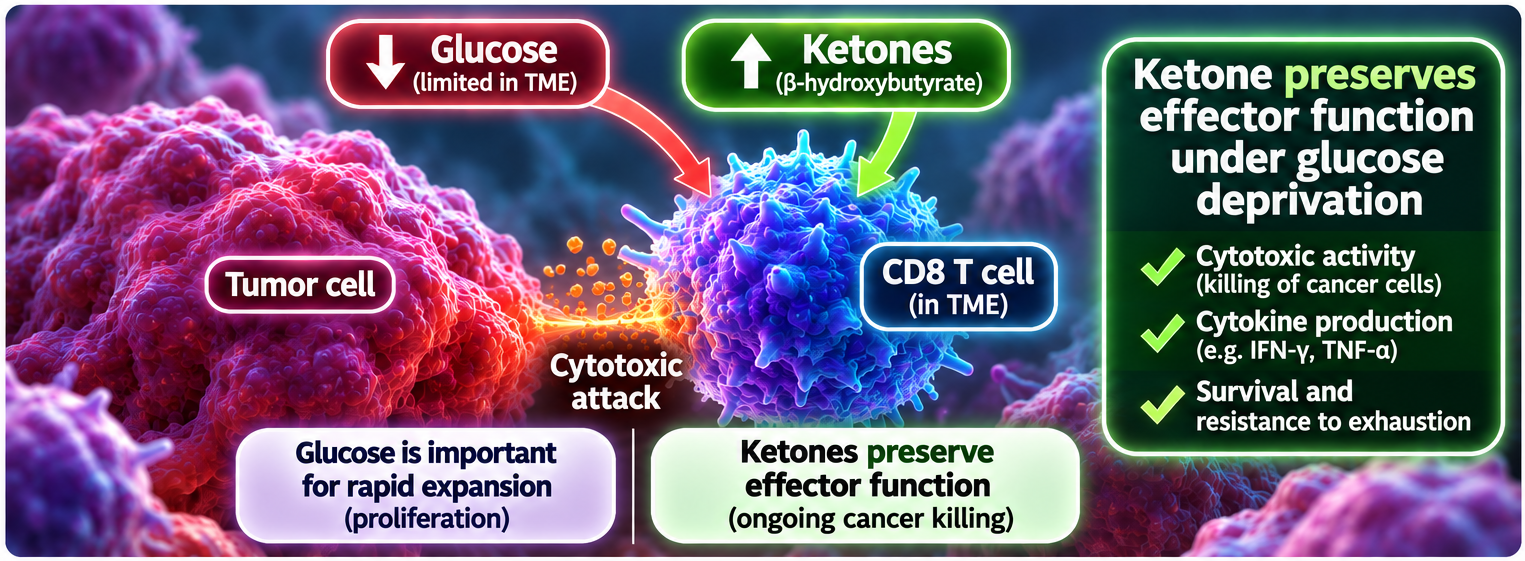
The tumor microenvironment (TME) is frequently immunosuppressive. Poor vascular delivery, intense nutrient competition and metabolic waste products create challenging conditions for immune cells. Yet a glucose-poor environment does not necessarily mean that their effector machinery must stop working.
Ketones support CD8 T-cell effector function in experimental models of ketogenic metabolism. Rapid T-cell expansion has substantial glucose demands, but proliferation and the ability of an already activated T cell to attack its target are different biological tasks.
This distinction matters inside the tumor. CD8 T cells must maintain cytotoxic activity and cytokine production even when the surrounding cancer cells compete aggressively for glucose. Studies of β-hydroxybutyrate and ketogenic conditions show support for T-cell metabolism and antitumor effector activity.
For Therapeutic Hypoglycemia, the possibility is compelling: increasing ketone availability while reducing glucose could put hypoxic, glycolysis-dependent cancer cells under metabolic pressure while sustaining the effector functions of tumor-infiltrating T cells.
The central experiment is therefore not simply whether T cells survive low glucose, or whether they proliferate rapidly. It is whether they continue to kill cancer cells under the glucose concentrations and ketone conditions proposed for Therapeutic Hypoglycemia.
Evidence that ketones support effector function in experimental settings makes this a strong research question. Preservation of antitumor immunity during profound therapeutic hypoglycemia in patients has yet to be demonstrated.