
Williams and colleagues (2025) described metabolic communication between triple-negative breast cancer cells and neighboring adipocytes. Their work raises a larger question: when fatty acid oxidation (FAO) is inhibited in a living animal, how much of the antitumor effect comes from the tumor itself—and how much from the rest of the body?
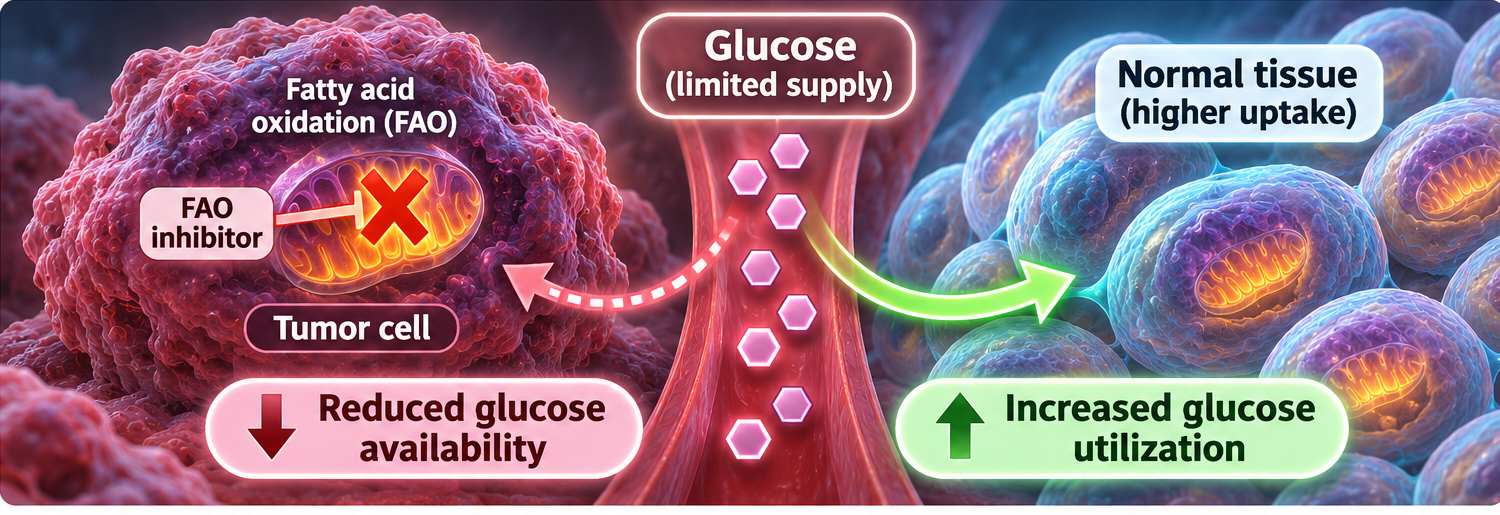
In cell culture we can inhibit FAO and study cancer cells in relative isolation. In the body, the same inhibitor also acts on the heart, skeletal muscle and other tissues that normally use fatty acids extensively. If they shift toward glucose, they become stronger competitors for the glucose circulating in blood.
This is not merely a theoretical possibility. Experimental FAO inhibition has increased glucose uptake in normal tissues. The exact whole-body response depends on the inhibitor, dose, nutritional state and the liver's compensatory glucose production. But the implication is striking: a tumor could face reduced glucose availability even if no inhibitor reaches it at an effective concentration.
There may be a second, less obvious effect. Blood glucose concentration is not the same thing as glucose turnover, and it is not a direct measure of insulin secretion. If the organism changes how it handles glucose, insulin signaling could change substantially without a dramatic change in measured blood glucose. Whether that happens under a particular FAO-inhibition regimen must be measured, not assumed.
My question is therefore whether part of the response attributed to direct interference with tumor FAO actually reflects systemic competition for glucose—and perhaps altered insulin signaling. To answer it, animal experiments need to measure the host as carefully as the tumor.
Study discussed: Williams et al. (2025); original post link: https://lnkd.in/d8JqYpht