
A major randomized trial has changed the way we should think about exercise after colon cancer treatment.
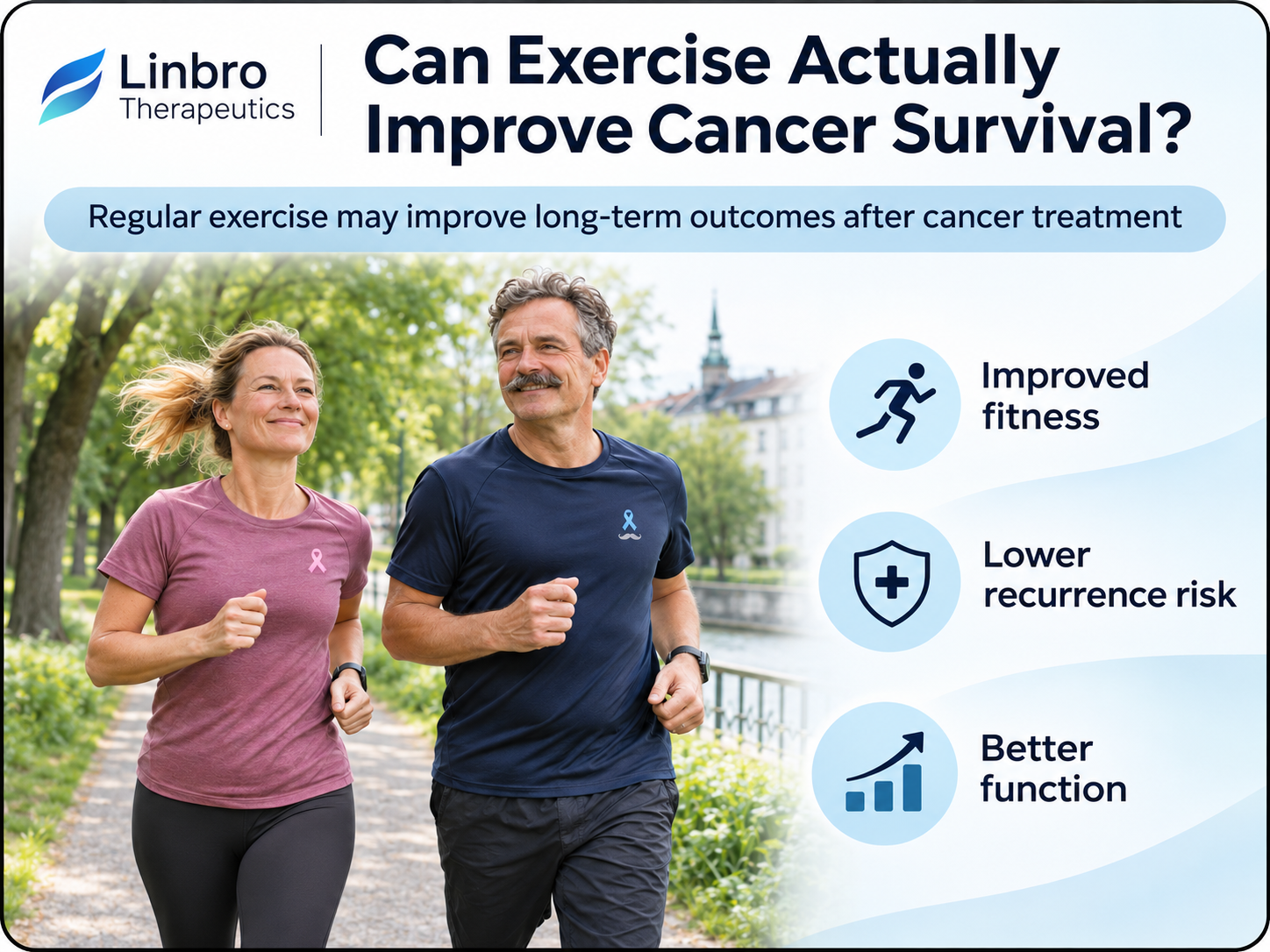
Figure 1. Exercise and cancer survival. Illustration of outcomes investigated in the CHALLENGE trial in patients treated for colon cancer.
Exercise is often recommended after cancer treatment to improve fitness, energy and quality of life. But can physical activity also reduce the risk of cancer returning — and help people live longer?
In 2025, the CHALLENGE trial provided an unusually clear answer for patients treated for colon cancer.
The results were difficult to ignore
Researchers followed 889 people who had undergone surgery for stage III or high-risk stage II colon cancer and completed chemotherapy. Half were offered a structured three-year exercise programme with ongoing support. The others received health-education materials.
After five years, 80.3% of the exercise group were alive without recurrence, a new primary cancer or death, compared with 73.9% in the comparison group. That is a 6.4-percentage-point difference. Across follow-up, the relative rate of these events was 28% lower in the exercise group.
At eight years, 90.3% of the exercise group were alive, compared with 83.2% of the comparison group — a difference of 7.1 percentage points. Overall survival was a secondary outcome, while disease-free survival was the main outcome the trial was designed to test.
Why this study matters
Previous research had repeatedly shown that physically active cancer patients often do better. The problem was separating the benefit of exercise from the possibility that healthier people are simply more active.
CHALLENGE tackled that problem by randomly assigning patients to a sustained exercise intervention or a comparison group. Its most important result was not that exercise improved fitness. It was that a structured programme significantly improved disease-free survival.
The study concerned a specific group: people with surgically treated colon cancer who had completed chemotherapy. We cannot simply transfer the exact survival numbers to every cancer diagnosis. But we can take the larger lesson seriously.
Exercise belongs in the cancer conversation
Physical activity affects several systems at once: circulation, muscle, insulin signalling, inflammation and immune function. CHALLENGE cannot tell us which of these changes mattered most. Other studies are beginning to explain how exercise may influence both the patient and the tumor.
For decades, exercise was viewed mainly as supportive care. CHALLENGE shows that it can also influence one of the outcomes patients care about most: whether their cancer returns.
Research sources
Courneya KS et al. (2025). Structured Exercise after Adjuvant Chemotherapy for Colon Cancer. New England Journal of Medicine. https://doi.org/10.1056/NEJMoa2502760
Comments
How your comment is handled
Linbro Therapeutics AB is responsible for comments. Your display name, text and date are published if your comment is approved. Your ChatGPT identity is used for sign-in and spam prevention, but is not shown publicly. Pending comments are deleted within 90 days. Approved comments remain until removed or the comment service is discontinued. Do not include sensitive health information. Contact sture.hobro@linbrotherapeutics.com to request removal or ask about how comments are handled.