
After about 25,000 hours studying cancer metabolism since 2017, I have collected a set of complementary strategies that I would want to use if I were diagnosed with cancer. They range from daily habits to dietary approaches, drugs and supplements. They do not all have the same evidence, purpose or risk.
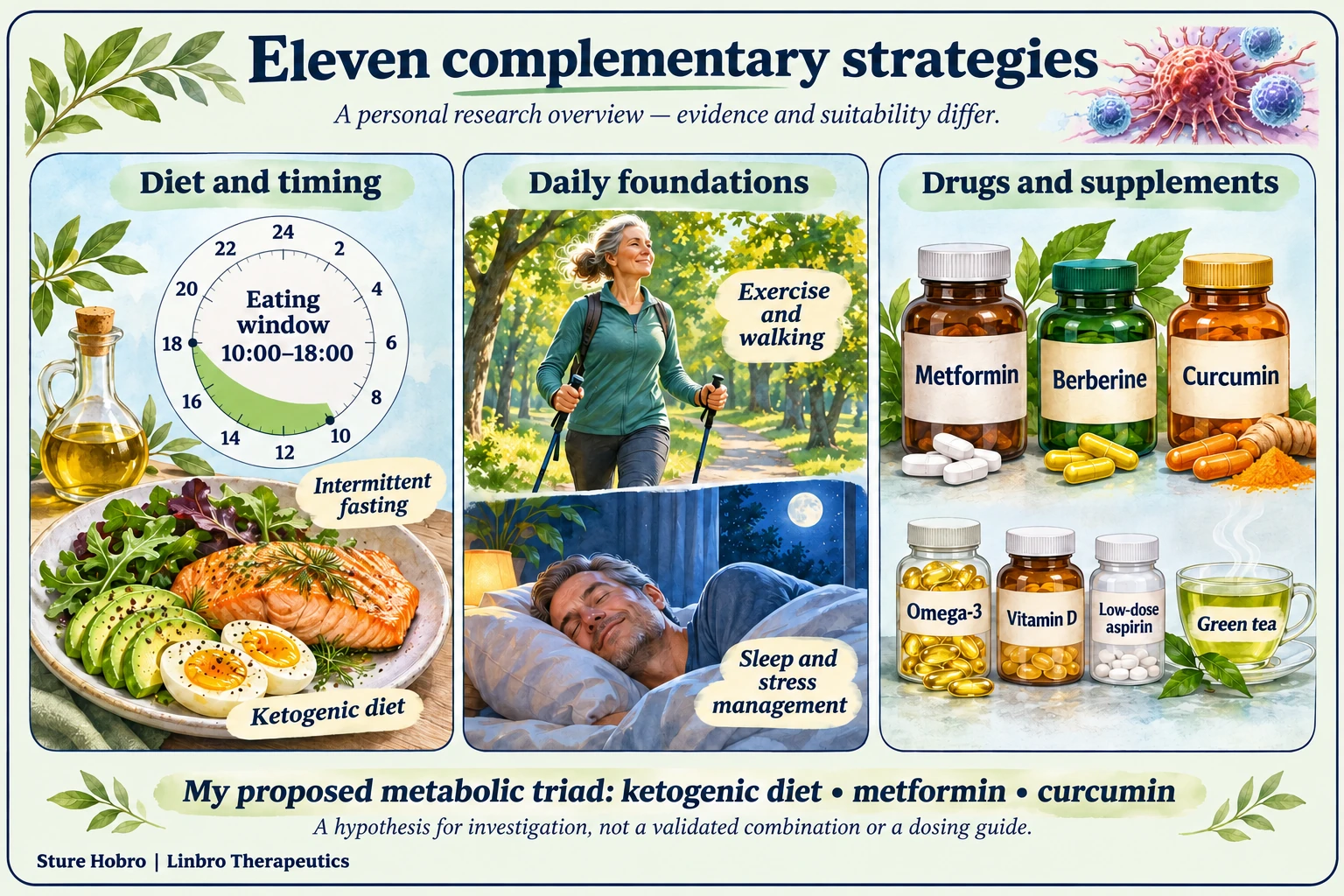
The eleven items in my overview are ketogenic diet with intermittent fasting; metformin; curcumin; intermittent fasting as a separate approach; exercise and walking; sleep, stress management and meditation; omega-3; vitamin D; berberine; green tea; and low-dose aspirin.
My interest is not primarily that these interventions would eliminate cancer on their own, but that they may make it more difficult for cancer cells to survive and adapt while conventional cancer treatments attack the tumor through other mechanisms. If tumor cells become less able to access or utilize their preferred fuel, their capacity to maintain growth, repair damage and withstand treatment-related stress may be reduced.
Normal cells, by contrast, generally retain greater metabolic flexibility and can increase their use of alternative energy substrates such as fatty acids and ketone bodies when glucose availability falls. This potential difference in metabolic adaptability provides a rationale for exploring whether glucose- and glycolysis-targeting interventions could complement conventional cancer therapies.
Note: Supplements and medicines need individual review: aspirin can cause bleeding, and products such as curcumin or berberine can interact with treatment and must be discussed with the treating oncologist.
Sources
Goodwin et al. (2022). The MA.32 randomized clinical trial.
https://doi.org/10.1001/jama.2022.6147