
Changing the metabolic environment of a tumor could affect much more than its ATP supply. In our proposed Therapeutic Hypoglycemia approach, the aim is to reduce glucose and glutamine availability while increasing ketones and modifying buffering. The interesting question is how these changes interact across different cell types.
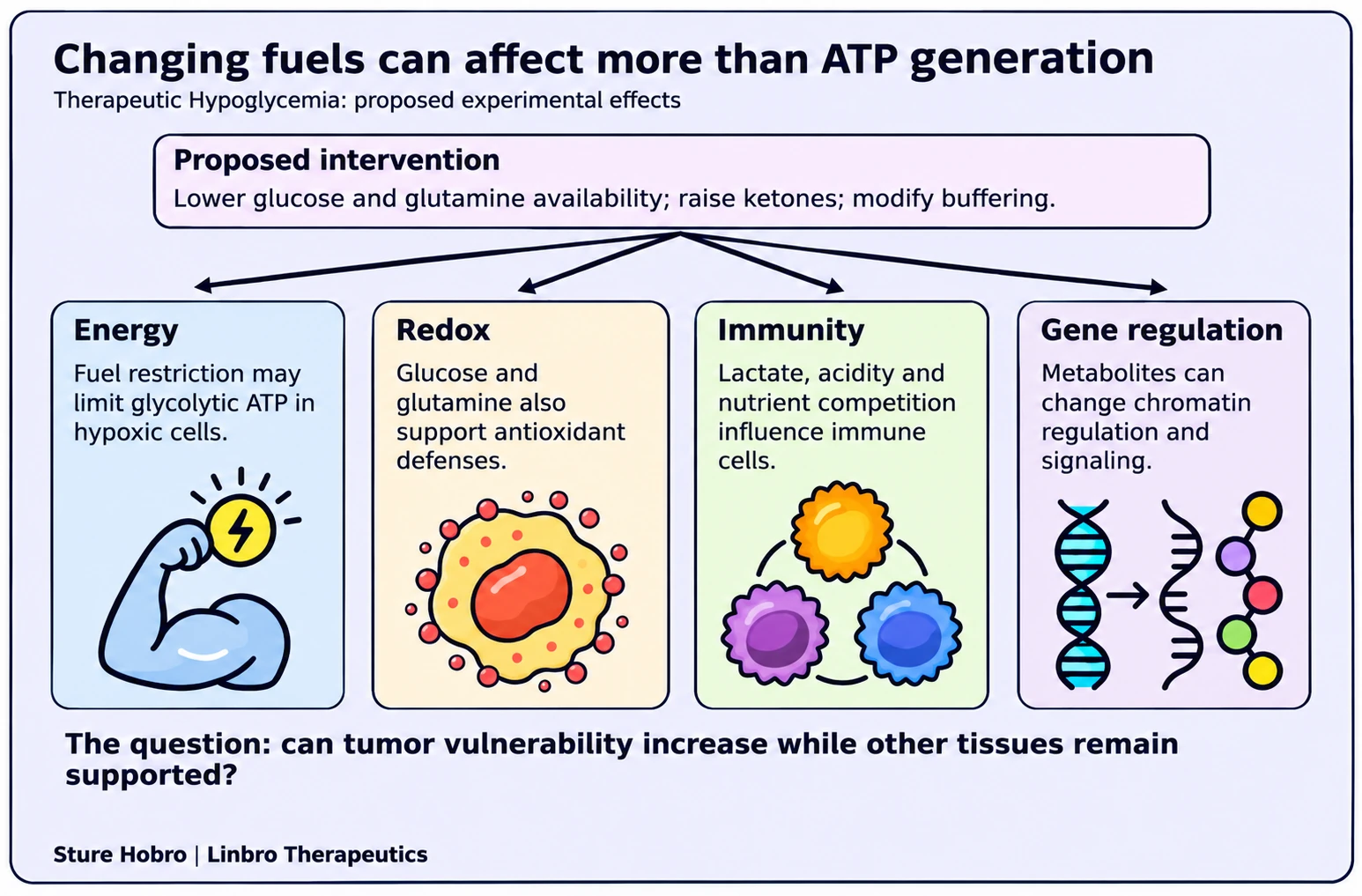
Energy is one part of the picture. Severely hypoxic cells depend on glycolysis for ATP, while oxygenated cells can use oxidative fuels. Raising ketones cannot rescue oxidative ATP production where oxygen itself is insufficient.
Another important issue is how cancer cells cope with oxidative stress. Both glucose and glutamine can support the cellular systems that protect against oxidative damage. Reducing the availability of either nutrient may therefore increase metabolic stress.
The immune environment also matters. Lactate accumulation, acidity and competition for nutrients can impair antitumor immune activity. Reducing these pressures could help some immune cells.
Metabolism also communicates with gene regulation. A shift away from glucose metabolism and toward ketone utilization changes not only cellular fuel supply but also intracellular signaling. β-hydroxybutyrate influences gene expression and has been shown experimentally to affect pathways involved in stress responses, inflammation, cell survival, growth and differentiation. Several of these pathways are dysregulated in cancer.
These connections make the proposal worth investigating as an adjunct to existing treatments.