
Can tumor cells escape glucose restriction by switching to ketones? In severely hypoxic regions, the central obstacle is oxygen: ketones provide ATP through mitochondrial oxidation and cannot replace glucose as a fuel for anaerobic glycolysis.
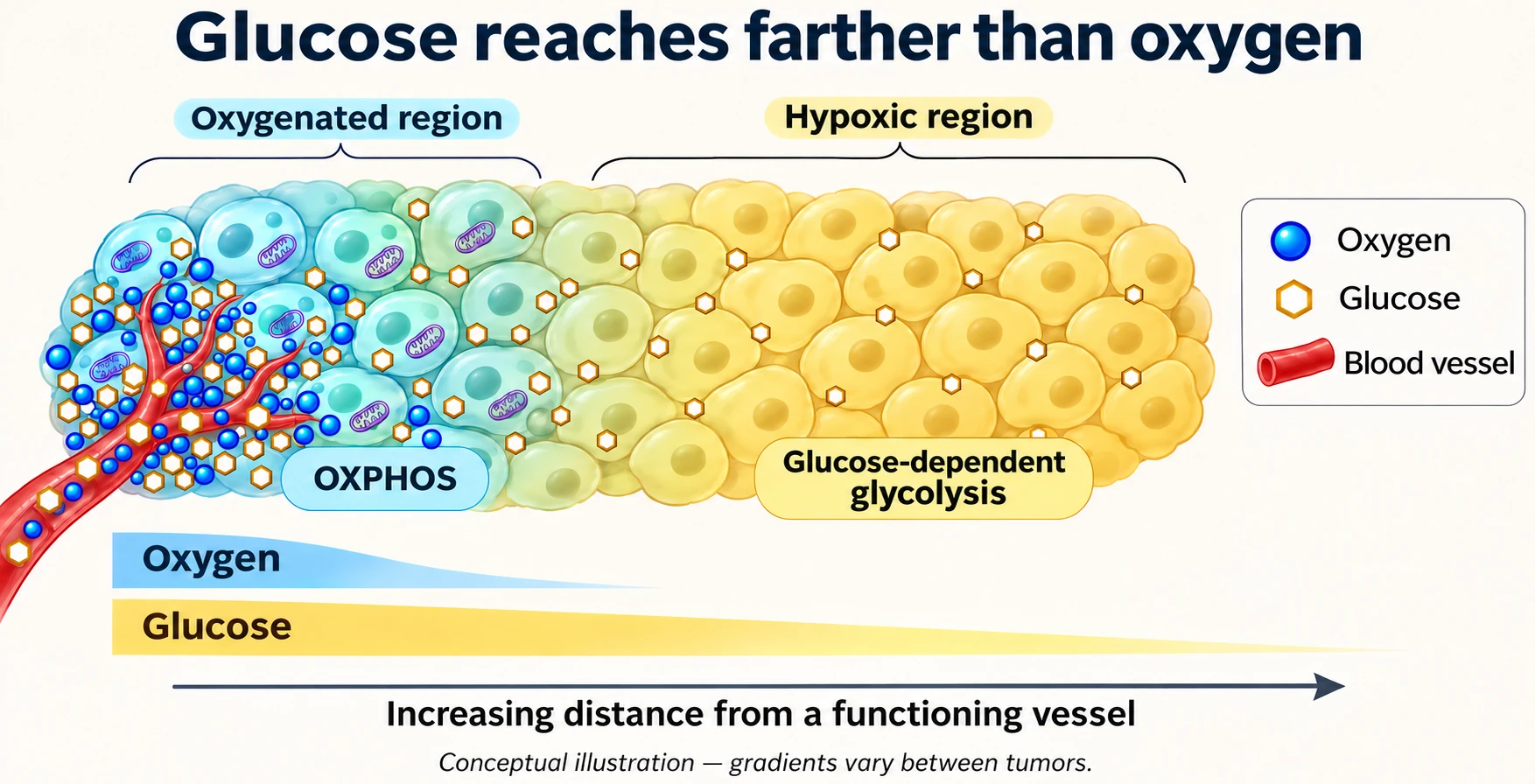
Some tumor cells can use ketones when oxygen and the necessary enzymes are available. Cells near well-perfused vessels can retain substantial oxidative phosphorylation, OXPHOS. Poor vascular supply creates hypoxic regions further from functioning vessels. The ability to use an oxidative fuel therefore varies within the same tumor.
This does not require defective mitochondria. Even functioning mitochondria need oxygen. In a glioma study, Maurer and colleagues found that ketones protected neurons from glucose withdrawal but did not rescue the tested glioma cell lines; hypoxia also reduced expression of several ketone-metabolizing enzymes. These results concern those experimental models, rather than every tumor.
Glucose can reach regions where oxygen is already severely depleted, although glucose also falls with distance and consumption. High-affinity GLUT transporters facilitate glucose uptake even under stress. Glycolysis yields only 2 ATP per glucose, but it can sustain ATP production without oxygen.
Glutamine can sustain TCA flux and support oxidative ATP production when sufficient oxygen remains. In deeper hypoxia, its contribution to ATP becomes limited.
My hypothesis is that Therapeutic Hypoglycemia could exploit this oxygen-dependent bottleneck: alternative oxidative fuels support oxygenated tissues while severely hypoxic tumor regions remain dependent on glucose.
Sources
Maurer et al. (2011). BMC Cancer 11:315. https://doi.org/10.1186/1471-2407-11-315