
Immunotherapy can be powerful, but many tumors remain difficult for immune cells to attack. One reason is the environment in which the immune response must operate. Oxygen, nutrients, lactate, tissue structure and immune-cell state all matter.
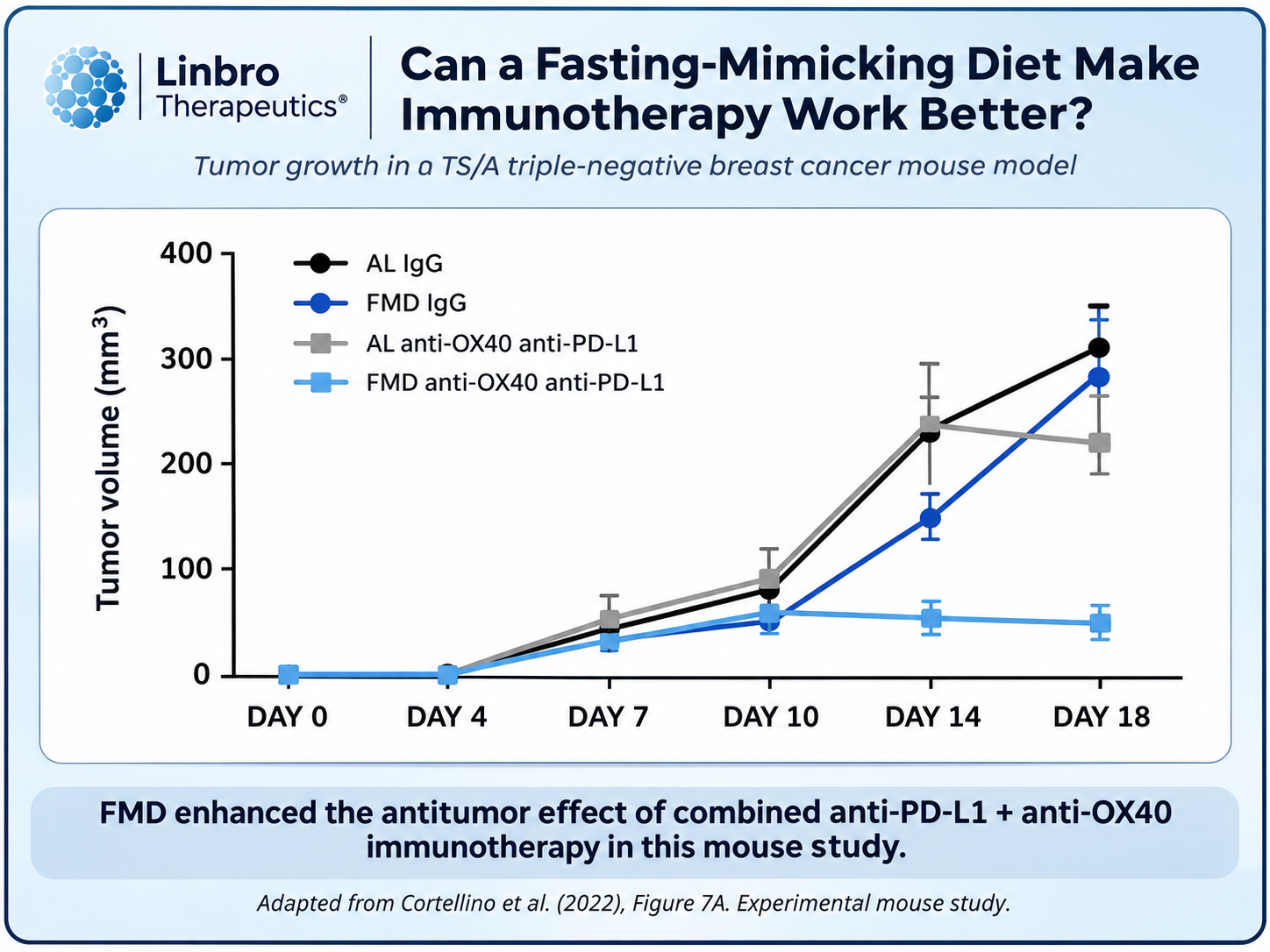
Figure 1. Fasting-mimicking diet enhances the antitumor effect of immunotherapy in mice.
Tumor growth in mice bearing TS/A triple-negative breast tumors treated with control antibodies or combined anti-PD-L1 and anti-OX40 immunotherapy, with or without a fasting-mimicking diet (FMD).
Black: standard diet + control antibodies; dark blue: FMD + control antibodies; gray: standard diet + immunotherapy; light blue: FMD + immunotherapy.
The combination of FMD and immunotherapy markedly suppressed tumor growth compared with either intervention alone.
Adapted from Cortellino et al. (2022), Figure 7A (TS/A mouse tumor model).
Cortellino and colleagues (2022) tested an intriguing combination in experimental models of poorly immunogenic triple-negative breast cancer: a periodic fasting-mimicking diet together with antibodies targeting PD-L1 and OX40. The dietary intervention enhanced the antitumor effect of this immunotherapy combination.
The researchers observed a striking metabolic shift: the fasting-mimicking diet moved tumor metabolism from glycolysis toward oxidative phosphorylation. At the same time, it reshaped the tumor microenvironment, reduced collagen deposition and expanded a population of early exhausted effector T cells.
Together, these changes were associated with a stronger response to combined anti-PD-L1 and anti-OX40 immunotherapy in two mouse models of triple-negative breast cancer. The researchers also found that FMD prevented immunotherapy-related anaphylaxis (potentially life-threatening allergic reactions) in mice by limiting excessive immune activation.
This suggests a useful way of thinking about cancer treatment. Instead of acting only on the immune cell or only on the cancer cell, metabolic interventions may alter the conditions under which they confront one another. A dietary intervention could change more than circulating glucose or ketone levels.
It is important not to confuse a fasting-mimicking diet with a ketogenic diet, or either of them with Therapeutic Hypoglycemia. They produce overlapping but different physiological conditions.
For me, the central question is whether a short, controlled metabolic intervention could create a more favorable window for immunotherapy in cancer patients — and whether that effect can be demonstrated in patients.
Reference
Cortellino S, et al. (2022). Fasting renders immunotherapy effective against low-immunogenic breast cancer while reducing side effects. Cell Reports, 40(8), 111256.
Comments
How your comment is handled
Linbro Therapeutics AB is responsible for comments. Your display name, text and date are published if your comment is approved. Your ChatGPT identity is used for sign-in and spam prevention, but is not shown publicly. Pending comments are deleted within 90 days. Approved comments remain until removed or the comment service is discontinued. Do not include sensitive health information. Contact sture.hobro@linbrotherapeutics.com to request removal or ask about how comments are handled.